
The China-Lebanon Nexus: Changing Dimensions of Interregional Economic Ties
1. Introduction
Since 2014, Lebanon's economy has been defined by a trade deficit which, coupled with the economic collapse that began in 2019 , has further damaged the country’s economic output due to curbed purchasing power, decreased access to foreign currency, and damage done to much of the country's formal banking infrastructure (Lebanon Crisis Analytics Team, 2024, pp. 4-6).
In this context, however, Chinese imports have continued to grow, providing an opportunity for economic relief as businesses and individuals have been able to procure inexpensive products of acceptable quality and sell them on the local market. Exports in the opposite direction, meanwhile, have stagnated such that by 2023, Chinese exports to Lebanon stood at approximately $2.29 billion, while Lebanese exports to China totaled just $66.2 million, making China Lebanon’s top import partner over much of the last decade as Figure 1 shows.
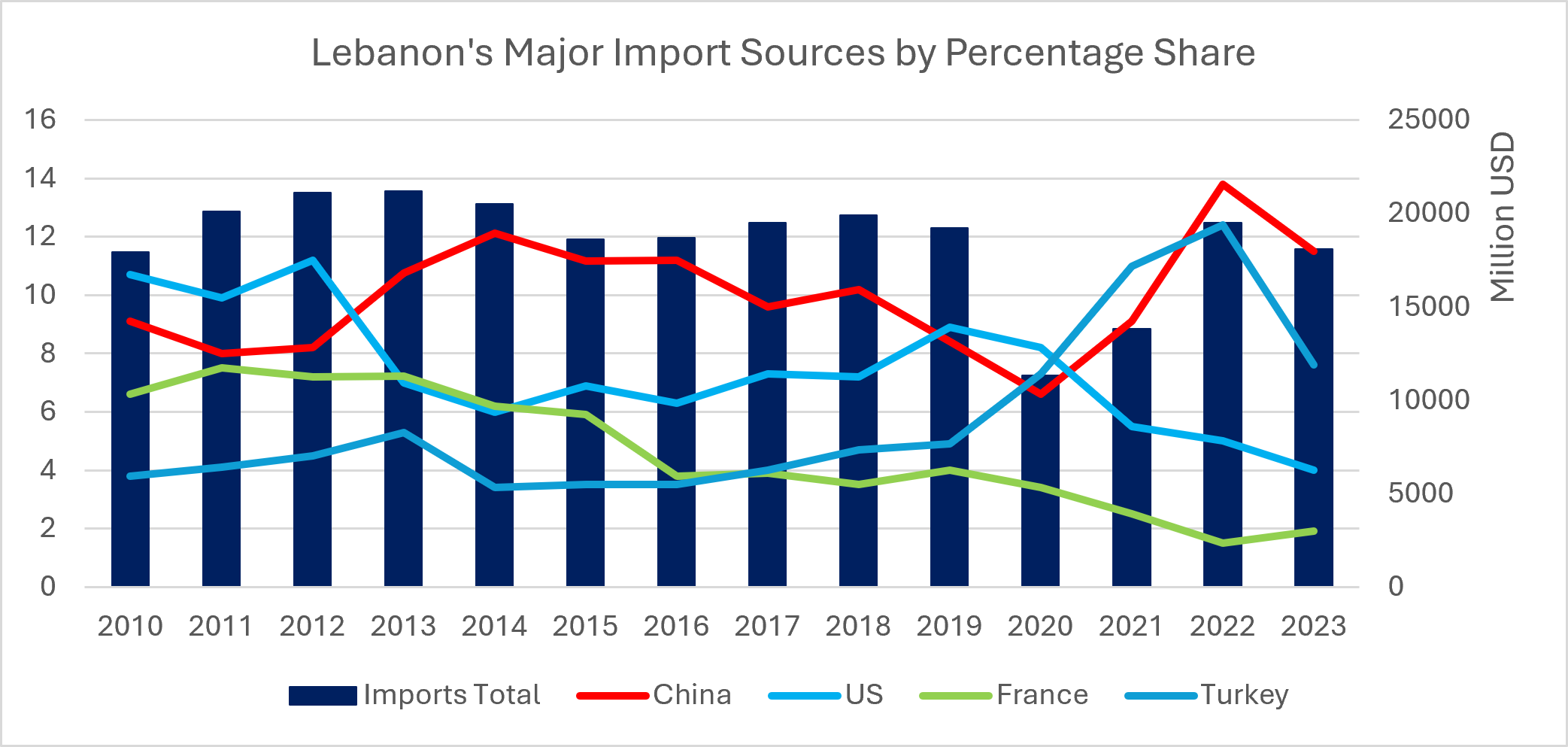
Figure 1: Lebanon’s Major Import Sources 2010-2023 (World Bank, n.d).
Yet as this paper will demonstrate, even these figures almost certainly understate the true scale of Chinese import penetration due to the structural invisibility (or concealment) of a significant portion of this trade to Lebanese customs authorities.
Moreover, the channels through which Chinese goods reach Lebanese consumers and businesses have diversified substantially. Indeed, alongside traditional wholesale importers, a network of Lebanese expats operates from China and help facilitate large orders to patrons. Moreover, a new archetype of Lebanese vendor is emerging as sprawling e-commerce Instagram pages, enabled by Chinese platforms such as Shein , Temu, and AliExpress and reshaping the retail landscape in ways that have yet to be systematically analyzed.
This paper attempts to fill a gap in the literature by examining the Sino-Lebanese commercial nexus from multiple angles: the perspectives of Lebanese nationals based in China who facilitate trade at the source; local business owners who import Chinese goods for domestic retail; and informal online vendors who leverage Chinese supply chains to serve Lebanese consumers without traditional retail infrastructure. Together, these three vantage points offer a more complete picture of a trade relationship that is simultaneously massive in scale, understudied, and consequential for Lebanon's economic future.
In this regard, this paper aims to answer the following questions:
1- What structural, economic, and geopolitical factors explain the accelerating penetration of Chinese goods into the Lebanese market, particularly in the context of the post-2019 economic crisis?
2- What are the operational, financial, and institutional mechanisms through which Lebanese commercial actors engage Chinese supply chains, and how do informal intermediary networks, defined as entities outside state detection, shape the character of this trade?
2. Methodology
This study adopts a mixed-methods approach, combining qualitative interviews, a quantitative survey component, and official trade data, in order to capture both the structural dimensions of trade flows and the micro-level practices and perceptions of individual actors within them.
Primary data was gathered from three populations. First, in-depth interviews were conducted with eleven Lebanese expatriates based in China, predominantly in the manufacturing hubs of Yiwu and Guangzhou. These individuals work as agents, sourcing intermediaries, or business owners directly embedded in Chinese production networks. Second, ten local Lebanese business owners engaged in importing Chinese goods were interviewed, representing sectors including toys, furniture, construction materials, and consumer electronics. One interviewee's family had maintained commercial ties with China since the 1950s, providing a longitudinal perspective on the relationship's evolution. Third, thirty Lebanese operators of mostly Shein Instagram store pages were surveyed, capturing an emerging segment of trade activity that is largely invisible in official statistics.
Secondary trade data was drawn from the Observatory of Economic Complexity (OEC), the United Nations Statistics Division (UNSD), and World Bank databases. These sources were used to situate primary findings within broader trade flow data and to contextualize Lebanon's import dependency over time.
Regarding primary data collection, several challenges arose, such as informants requesting anonymity due to concerns about tax exposure or reputational risk associated with their import activities .
This paper’s analytical approach is informed by the emerging literature on China-MENA trade studied ‘from below’, a methodological orientation that takes seriously the informal, relational, and extra-legal dimensions of globalized commerce that formal trade data systematically miss (Bodomo, 2012; Castillo, 2016; Mathews et al., 2017). As Hayakawa argues in the context of China-Palestine trade, the unreliability of formal trade data is “a helpful entry point to understanding the value of a ‘bottom-up’ approach while giving insights that can instigate broader enquiries” (2023, p.5).
This paper applies the same orientation to the Lebanese case where formal trade is treated as commerce conducted through legally recognized and documented channels, including registered businesses, customs procedures, and regulated financial transactions, and informal trade as commerce conducted partly or wholly outside these formal regulatory and documentary frameworks. These are not separate domains but seamlessly interwoven, with actors routinely moving between legal and extra-legal practices in the course of ordinary commerce.
3. Background: Sino-Lebanese Trade
3.1 Arab Push Factors
The post-9/11 transformation of US immigration policy created a significant barrier for Arab traders, including Lebanese businesspeople, to entering the United States. Indeed, in October 2002, the Department of Justice instituted the National Security Entry-Exit Registration System (NSEERS), a mandatory registration program requiring non-citizen males aged 16 and over from 25 designated countries, including Lebanon, to submit to fingerprinting, photography, and detailed interrogation by immigration officials (Department of Justice, 2002; American Bar Association, 2021). A second phase of NSEERS, announced in November 2002, extended these requirements to Lebanese nationals already present in the United States, compelling them to present themselves to immigration authorities regardless of their legal status or purpose of visit (Department of Justice, 2002). The human consequences were considerable: approximately 84,000 Arabs and Muslims complied voluntarily with the program, yet around 14,000 were subsequently placed in deportation proceedings as a direct result of their compliance (American-Arab Anti-Discrimination Committee, 2007). By 2011, after nearly a decade of operation, NSEERS had not produced a single terrorism conviction (CNN, 2016). The ACLU described the program as ethnic profiling akin to Japanese-American internment during World War II (cited in Tablet Magazine, 2023).
Between 2000 and 2007, the number of Arab visitors to the US fell from 250,000 to 170,000 (Simpfendorfer, 2011). Student flows tell a similar story: surveys recorded a 10% decline in Middle Eastern students entering US universities in 2002–03, followed by a further 9% fall in 2003–04, with Lebanon among the countries recording consistent single-digit declines across this period (Knickmeyer, 2007). Imports from the US nevertheless grew substantially in the following years (World Bank, 2023). However, those obstructed by Washington’s policies were arguably forced to seek alternative import sources and look to the East. As Chinese visa access remained comparatively easier, and as China's accession to the WTO in late 2001 positioned it to aggressively expand commercial ties with the Arab world, Arab traders reoriented eastward, with cities such as Yiwu and Guangzhou absorbing the commercial talent that had previously flowed toward American markets (Simpfendorfer, 2011; Belguidoum & Pliez, 2015).
3.2 Under-Invoicing in China as Pull Factor
On the supply side, China has become the largest exporter in the world, and as this section will demonstrate, its manufacturing cost advantage is amplified by an institutional environment rife with under-declaration and flexible valuation, creating a permissive environment for invoice manipulation at the point of export.
Misinvoicing (such as export under-invoicing) has been noted in China as a means for local and international businesspeople to bypass regulatory controls and manage cross-border capital flows (Cheung et al., 2015). This activity has major consequences, with empirical tracking by Global Financial Integrity demonstrating that trade-related illicit financial flows in Developing Asia—driven heavily by large-scale trade mispricing in high-volume trading economies like China—reached a cumulative US$1.69 trillion by 2022 (Global Financial Integrity [GFI], 2026).
The primary driver behind export under-invoicing is the strict architecture of Beijing’s capital account controls, which creates intense structural friction for individuals and firms attempting to move capital across borders (Cheung et al., 2015). Because formal channels are heavily restricted, market actors exploit trade documentation as a shadow mechanism for outward capital flight, where misinvoicing is utilized as a common business maneuver to bypass controls and move money across national borders, with export under-invoicing and import over-invoicing directly facilitating capital flight (Cheung et al., 2015, pp. 88-90).
Furthermore, decentralized local governance structures and regional growth incentives historically fostered an environment where local authorities and clearing intermediaries tolerated flexible compliance and documentation practices to maintain fluid, competitive export channels. The systemic utilization of trade misinvoicing evolved alongside China's rapid export expansion following its market reforms and subsequent accession to the World Trade Organization (WTO), with longitudinal economic analyses indicating that misinvoicing grew exponentially during periods of intense trade acceleration (Beja Jr, 2007, pp. 2-3).
Historically, decentralized processing zones and manual customs clearance channels offered wide windows for under-declaration, though the timeline of trade governance has since shifted dramatically toward rigidity through centralized electronic data platforms and cross-departmental auditing. Empirically, trade misinvoicing accounts for an overwhelming share of these movements. Indeed, building on foundational estimates by Kar and Freitas (2012), Kar and Spanjers (2014) estimate that trade misinvoicing accounts for 77.8% of illicit flows, asserting that China stands as the leading source of illicit capital flows among developing countries while dominating the flows originating from Asia. The macroeconomic consequences of this widespread misinvoicing are profound, generating vast value gaps that disrupt domestic resource mobilization, with average value gaps accounting for roughly one-fifth of total trade (GFI, 2026). On a national scale, these unrecorded transactions siphon massive amounts of capital beyond state regulatory control, driving billions of dollars into offshore safe havens and distorting balance-of-payments data (Beja Jr, 2007). For international trading networks, these flexible valuation channels lower transactional barriers, yet they expose supply chains to increasing risks as regulatory compliance tightens.
3.3 Sino-Lebanese Trade Discrepancies
On the demand side, the collapse of Lebanese purchasing power has made price competitiveness the dominant consideration in both commercial and consumer procurement, which gives cheaper Chinese goods an edge over European, Indian, or domestically produced alternatives.
China is the largest electronics exporter worldwide and Chinese electronics exports to Lebanon in 2023 stood at $631M, followed by cars and car parts ($177M), steel ($108M), and a range of consumer goods, reflecting the breadth of Chinese manufacturing capacity and the degree to which Lebanese importers have come to rely on Chinese supply chains. Lebanese exports to China, by contrast, are concentrated in a narrow range of primary commodities and processed: copper ($30.6M), cocoa preparations ($8.39M), and aluminum articles ($8.28M), with no manufactured goods of scale (Observatory of Economic Complexity, n.d.).
As Hayakawa (p. 8, 2023) sought to shed light on Sino-Palestinian trade by displaying the import and export reporting by Israeli and Chinese authorities respectively (called mirror data analysis), the author sought to follow this method with China and Lebanon with the result in Figure 2.
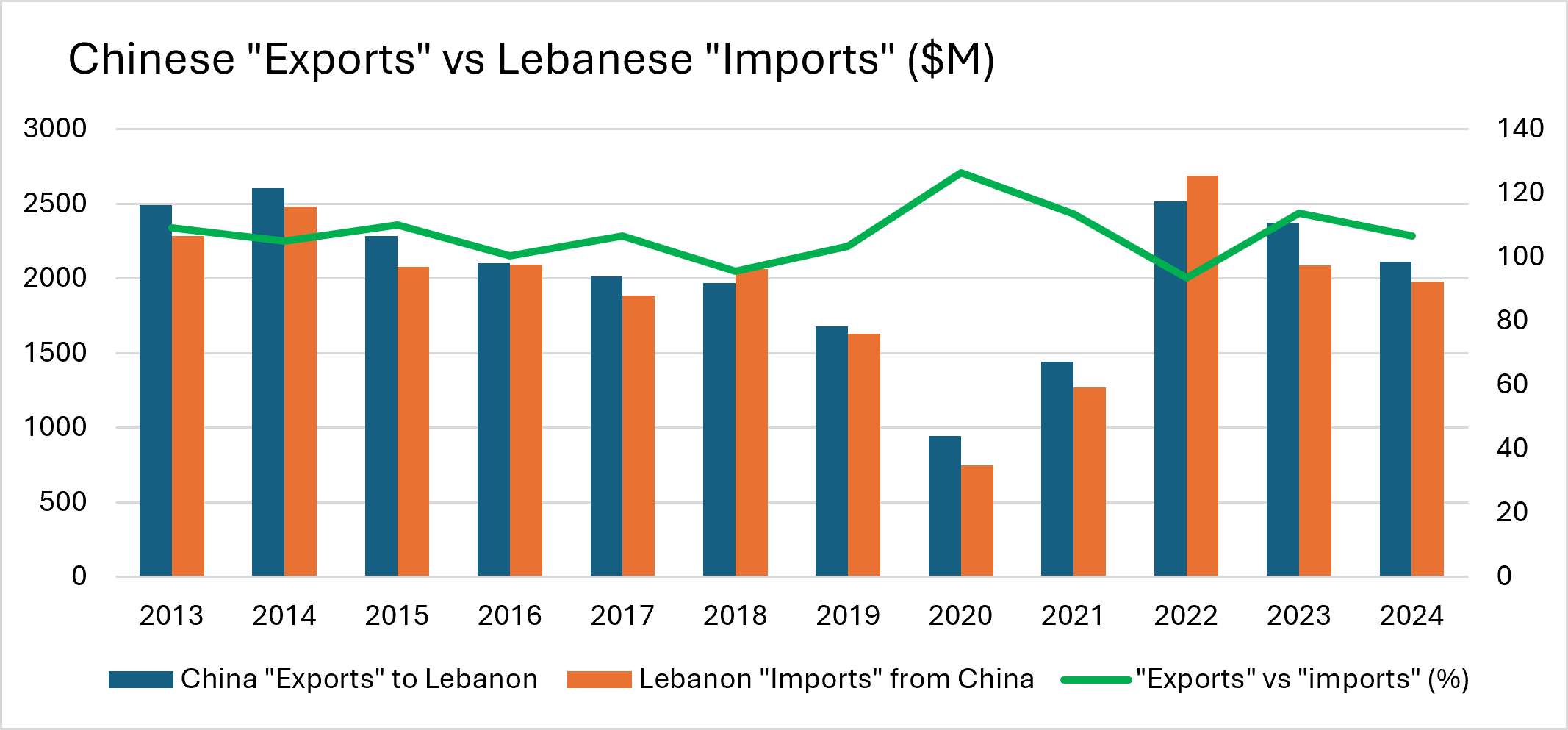
Figure 2: China-Lebanon mirror data analysis for 2013-2024 (Source: UNSD, n.d.)
As it is generally accepted by international reporting institutions that a reasonable range of discrepancy is approximately 10%, attributable to differences in Cost, Insurance and Freight (CIF) /Free on Board (FOB) valuation, timing, and classification (UNSD, 2019; World Bank, 2010), it would seem that, aside from the year 2020, the reporting by Lebanese customs and Chinese export authorities appears to fluctuate around a 10-20% discrepancy.
In order to assess the uniqueness of this, however, the author added a comparative element: the mirror trade statistics of Lebanon’s top trading partners: former mandatory power France, China’s rivals India and the United States, as well as regional powers Egypt, Türkiye, and the UAE. As shown in Figure 3, China’s discrepancy rate is similar to other countries’ rates, while the main outlier is the UAE.
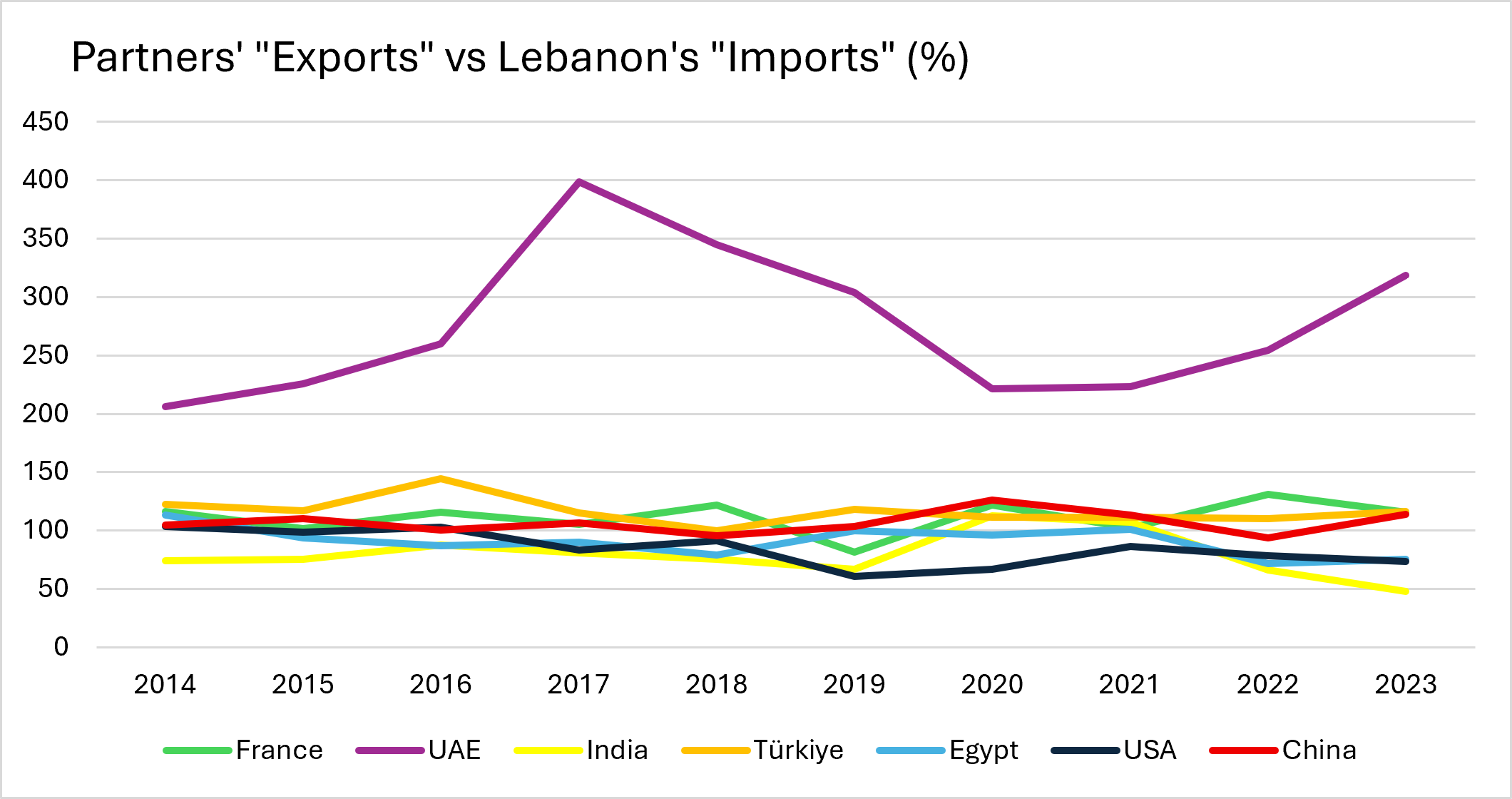
Figure 3: Major partners’ “Exports” vs Lebanese “imports” 2014-2023 (UNSD, n.d.).
This substantial discrepancy between Lebanese and Emirati official records of bilateral trade is one of this paper’s main empirical contributions. To understand the source of the above and its relation to Lebanon’s imports from China, we first examine UAE-China mirror trade in Figure 4.
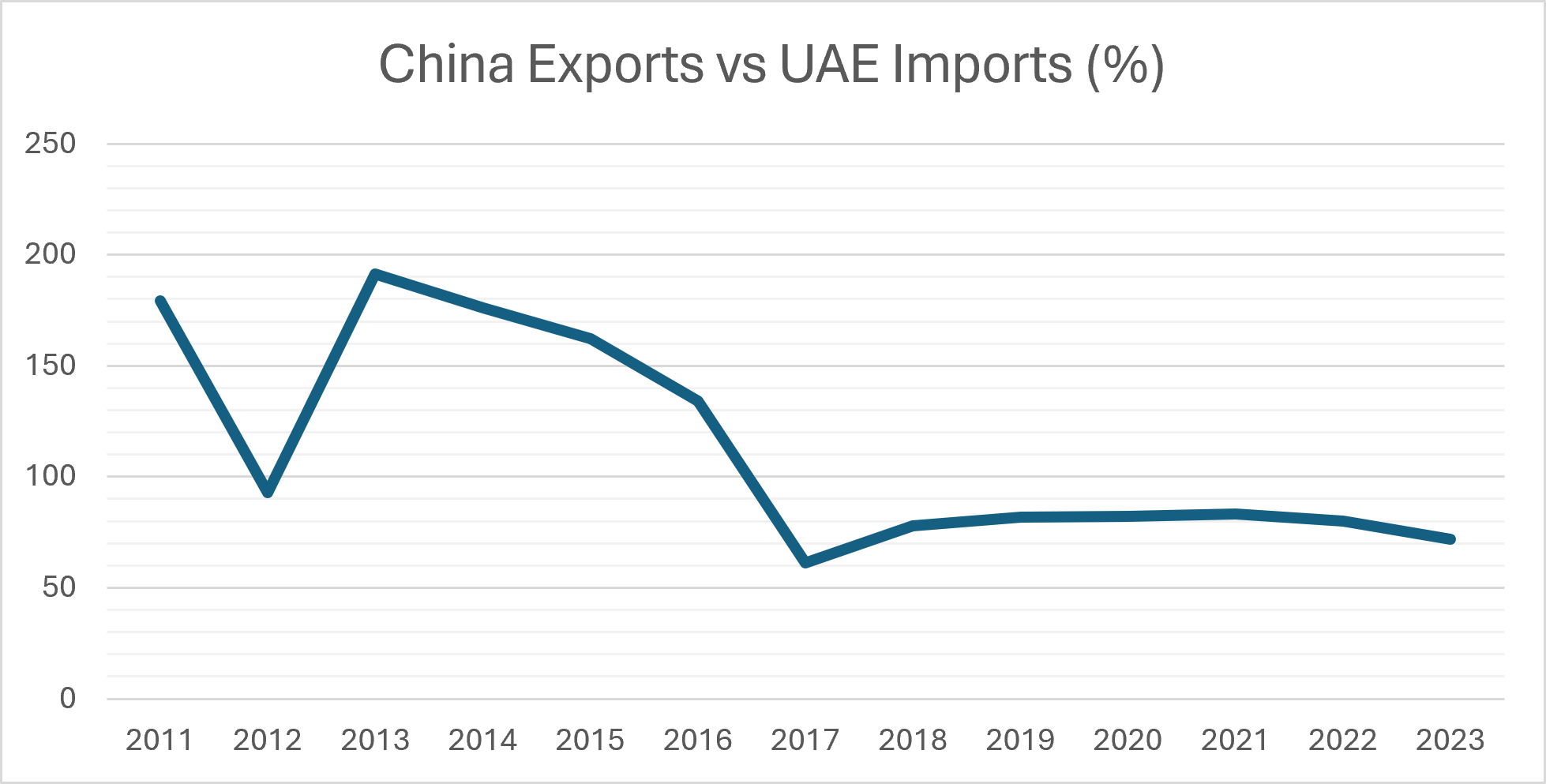
Figure 4: Chinese exports versus Emirati import data from 2011-2023 (Source: UNSD, n.d.)
We find striking discrepancies consistent with the above literature on under-invoicing following 2017, whereas the period prior seems to be rife with underreporting on the UAE side. While it is difficult to prove based on secondary data alone the exact products behind the re-export and import gap, this is where primary data can be utilized as firsthand accounts detail the goods they procure from China, the scale of this procurement, and whether or not these are officially documented in Lebanon.
To understand the drivers and dynamics of this discrepancy, we turn to the findings from primary data gathering: Lebanese merchants.
4. Meet the Agents: The Lebanese Merchants of Chinese Goods
4.1 Lebanese Expats in China
The Arab merchant community in Yiwu has been described as “the unseen cogs that hold [Sino-Arab commerce] together” (Hayakawa, 2022). In 2010, the MENA region was estimated to account for approximately 70% of Yiwu’s foreign population (Belguidoum & Pliez, 2015, p. 6). Within this community, Lebanese are estimated to be one of the five largest Arab national groupings after Egyptians and Syrians (Hayakawa, 2022).
The eleven Lebanese expatriates interviewed for this study were all male, aged between 30 and 60, and concentrated in Yiwu and Guangzhou. Most have been in China for 5-7 years, although several have been there for longer. Their Mandarin proficiency varied, though the majority described themselves as intermediate speakers. Their main export categories included electronics, furniture, clothing, and general merchandise.
Informants were recruited through a snowball sampling (chain-referral) procedure that began with my maternal uncle, who has been importing goods from China for over three decades, initially while resident in Venezuela and, more recently, from Lebanon following his return. Through him I was introduced to the owner of a toy store in Choueifat, whose engagement with China dates to the 1980s, when he followed a maternal uncle who had established himself there prior. A third informant, the brother of my father's wife, has for many years conducted trade between China, Lebanon and Brazil. The remaining participants were recruited through the initial pool of informants as well as mutual friends. This snowball sampling is commonly employed where no sampling frame exists and where the population may be reluctant to engage with outsiders (Atkinson & Flint, 2001; Biernacki & Waldorf, 1981, pp. 141-143). Indeed, in addition to relying on personal networks, I attempted direct recruitment by contacting several Lebanese firms known to import from China. These efforts were largely unsuccessful: some firms declined on the grounds of limited time, while others denied any commercial connection to China. Even when a few agreed to the interview, my messages were left unanswered despite several gentle reminders.
This reluctance was consistent with the enforcement environment outlined above, in which disclosure of sourcing, declaration and clearance practices to an unfamiliar researcher may carry commercial or legal risk. It would seem that even in research, a wasta in Lebanon is all but necessary. In other words, in this study, access to this particular set of informants was contingent on personal introduction.
This recruitment path has implications for the evidence. The sample consists largely of long-established traders with transnational histories that predate the recent growth of online purchasing, and it is therefore likely to over-represent durable, successful operators and to under-represent recent entrants, informal sellers and those who have left the trade. Accordingly, the interviews are treated as situated accounts of how experienced intermediaries understand and describe the China trade, not as representative of Lebanese importers as a whole.
4.1.1 Geographic Nodes and Sectoral Specialization
Interview data from Lebanese traders engaged in cross-border wholesale procurement reveals a distinct spatial logic underlying China-based sourcing networks. Yiwu, located two to three hours from Shanghai by rail transport (though some reported a four-hour taxi journey), functions as a central node in this system precisely because of its market structure: vast wholesale complexes organized by product sector, including toys, construction materials, and other categories, operate as what the informant described as "supermarkets of the world." Fujian province was similarly identified as hosting thousands of bulk markets, while Guangzhou emerged as a specialized hub for electronics and cosmetics. This sectoral division of labor across cities means that traders' itineraries are shaped less by administrative geography than by commodity specialization, with merchants moving between Yiwu, Guangzhou, Shanghai, and Fujian according to what they are sourcing.
4.1.2 Stock, Speculation, and the Down-Payment System
A key feature of these markets is the ambiguous status of wares labeled "stock." According to some informants, in-stock goods are not necessarily produced for open sale; rather, they frequently represent inventory left behind by buyers who placed a down payment and subsequently failed to complete the transaction, leaving the goods "sitting in the warehouse." This suggests that Yiwu-style markets operate on a speculative production model in which partial payments from multiple prospective buyers underwrite manufacturing runs, with unclaimed goods absorbed into general stock. For new orders, suppliers typically require a 30-40% down payment before production or reservation of goods begins, with the balance due upon completion, commonly after a lead time of two weeks to one month.
4.1.3 Intermediaries and the Architecture of Trust
Trust is institutionally embedded in the transaction process rather than left to informal negotiation alone. Shops are affiliated with agencies that assign each buyer a designated contact, often a translator, since, as several informants noted, counterpart staff do not always speak Arabic. This intermediary role extends beyond language: it functions as a trust-building mechanism that becomes durable over repeated dealings. Buyers who have established a working relationship with a given office can subsequently transact remotely, placing orders by email without requiring an in-person visit. Some buyers additionally rely on documentation issued through their national embassy in China to formalize business orders, while others operate through personal networks of friends who maintain permanent offices in Chinese trading cities. Once sufficient trust is established, transactions with new orders can be concluded by phone, with payment sent in advance, provided no substantive changes to product specifications are involved.
Large-scale trade exhibitions, including events cited by one informant in Hong Kong and Guangzhou, serve a parallel function, bringing together Chinese manufacturers and international buyers in a single venue and further consolidating trust relationships that later enable remote transacting.
4.1.4 Logistics, Customs, and Legal Documentation
The movement of goods from Chinese suppliers to the buyer's home market involves a distinct logistical and regulatory sequence. Depending on the payment arrangement, for example "free on board" versus full payment prior to shipment, the trader liaises directly with shipping agents, who consolidate goods into containers and verify contents against orders. Each product category is subject to a specific customs duty percentage, and certain goods require laboratory certification before they are permitted to enter the destination market. Upon completion of these procedures, the container is delivered to the buyer's specified location along with documentation certifying the shipment's legal compliance.
4.1.5 Diaspora Intermediaries and the Lebanon-China Corridor
Some informants emphasized the role of a resident Lebanese and broader Arabic-speaking diaspora community operating within Chinese trading hubs, who work as on-the-ground facilitators for visiting buyers, placing orders, tracking container contents, and arranging transport. This network extends across the supply chain's full length: facilitators in China coordinate with corresponding agents or contacts at the destination port in Lebanon, who assume responsibility for tracking and receiving incoming containers. Buyers then pay outstanding duties and fees and receive documentation confirming that all obligations have been met. This dual-sided intermediary structure, with diaspora facilitators in China paired with receiving agents in Lebanon, constitutes an informal but highly organized logistical infrastructure that substitutes for the transactional trust typically provided by formal contract law in unfamiliar cross-border settings.
4.1.6 Challenges faced
Expats in China suffer from strategic as well as personal challenges. As Lebanon is in a “gray zone” in terms of sanctions, they cannot open accounts at major Chinese banks such as the Industrial and Commercial Bank of China (ICBC), whereas other Arab counterparts (such as Jordanians) are allowed. The main bank that Lebanese have access to is the Bank of China. However, even existing arrangements are a hostage to sudden changes as one interviewee described:
“The ABC Bank (Agricultural Bank of China) became very very strict during COVID. They closed my account and I couldn’t pay taxes. I was a platinum card holder and my company account was still closed. They were flexible with returning the frozen funds. They do not hold them” (Expat interview 1, September 1st, 2025).
The other major challenge this group faces is familial. Many struggle to marry, and if they do, their spouses often choose to remain in Lebanon. One interviewee’s marriage ended in divorce because the wife refused to move to China. Another interviewee had remained married but he and his wife agreed that the children should be raised in Lebanon as there were no Arabic schools available for children and he wanted them to have a normal childhood; he therefore spends most of the year away from them.
4.1.7: Findings
Finding 1: The ease of doing business with China has improved markedly.
Interviewees consistently noted that conducting business with Chinese suppliers has become significantly easier over time. Younger generations of Chinese business staff are described as more internationally oriented, more proficient in foreign languages, and more attuned to the expectations of foreign partners. Where earlier cohorts of Lebanese traders navigated substantial communication barriers, current operators describe a markedly more fluid transactional environment.
Finding 2: Sino-Lebanese trade relations are characterized by trust-based informality.
Trade at the interpersonal level is organized around personal trust rather than formal contractual structures. Interviewees described common practices including flexible payment terms, emergency credit extended by Chinese suppliers during Lebanon’s financial crisis, and informal dispute resolution through personal negotiation. As the literature on Yiwu has established, few transactions at the Futian Market are recorded by official invoices (Hayakawa, 2023, p. 6; Ibañez-Tirado & Marsden, 2020; Rui, 2018, p. 26), and the same informality characterizes the downstream relationships between Lebanese agents and their Chinese suppliers, which may help explain the bilateral China-Lebanon re-export discrepancy via the UAE.
Finding 3: Quality control remains a persistent and structurally embedded challenge.
Maintaining quality standards, particularly for bulk orders, still requires physical presence in China. The inability to conduct this oversight remotely was cited as the primary reason Lebanese traders cannot operate from Lebanon itself.
Finding 4: The sustainability of China’s export dominance
When asked about what products they facilitate the import of, several interviewees lamented how Lebanon has a low manufacturing capacity, in addition to being poor in natural resources, meaning Chinese manufactured goods are able to compete with a large chunk of local output and businesses as well as European rivals. Then, after asking them about the sustainability of China’s export power as wages continue to increase (Rui, 2018, p. 20; Zhou & Galbraith, 2021), Vietnam was mentioned as one of the solutions for this. With its lower labor and energy costs, many Chinese manufacturing orders are actually executed in Vietnamese factories. In terms of doing business in Lebanon, one interviewee lamented how, after sending a large shipment of clothes upon receiving a down payment, the Lebanese buyer did not complete his payment obligations. Pursuing legal action against him in Lebanon would be arduous without sufficient proof, while Chinese courts cannot bring to justice a foreign national in Lebanon .
4.2 Local Lebanese Business Importers
The ten local business owners interviewed represent a cross-section of the Lebanese import economy: a toy importer whose family has maintained commercial ties with China since the 1950s; a former Venezuelan resident with Lebanese citizenship importing Chinese construction materials; a furniture retailer; and others operating across consumer sectors.
The toy importer’s uncle first went to China in the 1950s. Despite being of the Druze faith, he married a Chinese woman. He sent after his nephew, the interviewee, in the 1980s and hosted him in Yiwu. The interviewee learned how to manage restaurants and with the help of his half-Chinese half-Lebanese cousins opened an Arabic cuisine restaurant in Beijing. “Lebanon is the mother, China is the lover,” he says before detailing the ease of life there and how Yiwu transformed from an unassuming hamlet to a major global trade hub. Under pressure from his family to marry a Druze woman, he returned to Lebanon and now operates a toy store in Choueifat. In corroboration with the previous group’s insight on informal and flexible business practices, he recounted an incident wherein a payment from Lebanon was delayed and he needed to make a deadline, resorting to calling a Chinese friend who wired him the funds that night after one phone call. No contract, no hesitation. This trust-based arrangement reflects the depth of relationship-based commercial ties in this corridor.
Other similarities with the expatriate group are as follows: Chinese suppliers were described as responsive and accommodating; personal relationships built over years, and in some cases generations, were identified as the primary mechanism for maintaining quality and resolving disputes. The long-standing nature of some of these commercial ties suggests that the Sino-Lebanese commercial relationship is not purely a product of recent geopolitical or economic shifts, but reflects a durable commercial logic predating the current crisis. Moreover, some businesspeople had to make quarterly trips to China for quality assurance as, despite a more nimble and worldly young workforce easing operations, concerns remain for bulk orders.
Interviewees, moreover, acknowledged the structural economic consequences of Chinese import penetration. Chinese goods were described as outcompeting not only domestic Lebanese manufacturers but also imports from India and Europe on a combined price-quality basis. The construction firm Laceco was cited as an example of a Lebanese producer undercut by Chinese alternatives. The implication for Lebanon’s residual manufacturing sector is one of further hollowing-out under conditions where competitive response is already severely constrained by the crisis.
Meanwhile, one informant’s account offers clarification on the UAE’s re-export dominance . He attended an expo in Hong Kong recently and was interested in procuring wristwatches. The smallest order available was 6,000 units. This is where the role of the UAE’s free port of Jabal Ali comes in: It imports bulk orders from China and these are re-exported at lower quantities to Lebanon and other countries. As he explains to me, Lebanon is a small market and thus minimum orders from China may not be feasible for many small businesses. Thus, many of their products are actually re-exported by land from the UAE. This may help contextualize the recent surge in Shein-related sub-stores in Lebanon operating on Instagram, described below.
4.3 Online Retail Vendors
According to Hayakawa, a shift to e-commerce had been budding prior to the COVID-19 pandemic (2022). As it developed,
[T]his shift to online communication had eased the need for Arab traders to visit Yiwu, while Middle Eastern consumers had accelerated their own direct purchasing of Chinese goods through online retail platforms like AliExpress (…) cutting out the middleman... In so doing, re-ordering global supply chains and modes of economic transaction (Hayakawa, 2022, para. 5).
In Lebanon, a few Instagram scrolls would inevitably land one on a video narrated by a woman and showing (off) a “hot” new item to buy: shoes, clothes, accessories, and even electronics. The page, moreover, would contain “Shein” and some variant indicating locality such as @Shein_Lebanon, @Shein_Beirut, @Shein_961, and so on.
The thirty such vendors surveyed for this study represent an emerging segment of trade activity largely invisible in official statistics and growing rapidly since the 2019 economic collapse. As will be expanded upon below, this segment of commerce is underreported in official statistics due to the network of customs insiders who can let certain products onto Lebanese soil under lowered to no customs fees, rendering them much cheaper than competitors. Additionally, many of these appear to be personal orders not exceeding certain thresholds above which business-related regulations are applicable. The online vendor sample was predominantly female and concentrated in the 18-30 age group, reflecting the demographic characteristics of social media-based commerce in Lebanon. Most had been operating their accounts for less than three years.
Procurement sources largely comprised bulk orders or flash sales from Chinese platforms such as Shein, Alibaba, and Temu. Unlike orders from factories (as in the abovementioned wristwatches), the sizes of orders can be as low as a single item, with shipping fees borne by the buyer.
Following the Lebanese financial crisis and the onset of the Gaza genocide, banks and citizens harbored a mutual wariness resulting in a sizable swath of the population without a bank account and thus without a means to shop online. While Whish Money, a local payment processor, rolled out an online card option, it would seem many Lebanese remain unaware of this, are ineligible for it, or find desirable items on the Instagram Shein pages selling for lower prices, thus requiring the pages to fulfill the order. The Shein vendors either display what they have ready for sale, or receive orders from clients and fulfill them with their own means, receiving as payment (mainly through Whish Money) the cost and a commission . Most operate in liaison with a shipping company (AHM Cargo), which charges $10/kg from China, and $6.95/kg from Dubai, thus adding to the UAE’s re-export numbers.
It should be noted, moreover, that several preferred to conduct the interview in Arabic rather than English, perhaps indicating the ease with which they are able to operate on Shein and the linguistic options furnished by international Chinese platforms.
Sales trends were broadly positive, with most vendors reporting higher or much higher order volumes over time. Product categories skewed toward electronics and tech accessories, clothing, home goods, and accessories.
The appeal of Chinese-sourced goods was attributed primarily to price, variety, and reliable supply chain access. Notably, the option to boycott Western brands was cited as a motivation by a substantial 25% of vendors, suggesting that geopolitical sentiment is not merely a background condition but an active commercial preference shaping sourcing decisions.
Challenges reported by vendors included shipping delays, perhaps resulting from the difficulties around the Red Sea (Houthi attacks) and the Arabian Gulf. On the Lebanese side: customs clearance delays, high customs charges, and complex and unclear regulations. To test these challenges, the researcher went to the Ministry of Trade and Economy and was surprised at the disarray of operations within, where there was no clear marker as to who was in charge of what. The staff was advised to speak to a m’khalles (literally, a finisher): an agent with knowledge of port and customs practices who can be charged with importing goods from overseas and may have links to the customs agent inspecting and assessing the value of imported wares. When the researcher contacted one such m’khalles, he was told that the customs on a given product can be lowered by up to 35%, but this would also entail a commission.
Meanwhile, an informant at the Lebanese Ministry of Finance described a significant discrepancy in tax reporting from this sector, suggesting that the informal character of these commercial flows, i.e., the fact that many of these are not treated as business-related by the port authorities or are able to bypass those altogether through their m’khalles, translates into substantial fiscal leakage. He goes on to say that the Lebanese state had been turning a blind eye to these practices, but as the number of these shops increases, so does the gap between the value of goods entering the country and the value being reported at the Lebanese port. It would seem that these vendors rely on m’khalles who significantly lowers the assessed value of a product, thus lowering its customs duties, and in return receives a commission. This status quo is set to change, as a local businessman interviewee said that a new customs scheme is being prepared, where goods will have a flat 22% customs rate based on guidelines by the Ministry of Trade and Economy and also those by shipping companies themselves. It is unclear at this stage whether this scheme has manifested and what impact it may have (if any) on the current state of affairs.
Despite being fiscally problematic, this swath of Chinese imports has enabled greater participation by women in enterprise, in stark contrast to the male-dominated monopolies benefiting from the laissez-faire business environment and a government unwilling or unable to meaningfully redistribute wealth. This is also a finding with potentially significant implications for gender and economic empowerment in the Lebanese context where formal employment and credit are constrained. It is also consistent with research on women’s social media entrepreneurship in the region, including Instagram-based businesses in Saudi Arabia (Bajandouh, 2026) and women’s use of social media for micro-enterprises in Jordan (Boshmaf, 2023).
5. Conclusion
This paper examined how Lebanese commercial actors engage Chinese supply chains, using interviews with expatriate traders in China and importers in Lebanon, a survey of Instagram-based vendors, and mirror trade data.
On the first research question, the evidence points to price as the dominant factor. The collapse in Lebanese purchasing power since 2019 has made price competitiveness decisive, and informants across all three groups described Chinese goods as outcompeting domestic, Indian, and European alternatives. Longer-term factors also matter. Some commercial ties date to the 1950s, and Arab traders have reoriented toward China since the early 2000s. Among vendors, 25% cited the option to boycott Western brands as a motivation, suggesting that geopolitical sentiment shapes some sourcing decisions. A fuller account of the geopolitical dimension, including state-level relations and sanctions exposure, lies beyond the data collected here.
On the second research question, trade is organized around personal trust, diaspora intermediaries, flexible credit, and informal dispute resolution rather than formal contracts. Large importers rely on expatriate facilitators in China paired with receiving agents in Lebanon. Smaller vendors rely on cargo companies, Whish Money payments, and, according to informants, customs intermediaries (m’khalles) who can lower assessed values. The mirror data show that the China-Lebanon discrepancy falls within the range expected from valuation differences, while the UAE-Lebanon discrepancy is a clear outlier. Informant accounts of re-export through Jabal Ali are consistent with this pattern, but secondary data alone cannot confirm it.
The paper has several limitations. The interview sample was recruited through personal networks and likely over-represents established traders. The vendor survey is small and non-random. The claims about customs under-valuation rest on a limited number of informants and could not be corroborated with customs records. The mirror analysis is conducted at the aggregate level, and the partner-attribution practice I draw on dates from 2011.
Further research should pursue product-level mirror analysis to test the re-export hypothesis, obtain Lebanese customs records or interviews with customs officials, include Chinese-side actors, and examine whether the reported flat customs scheme has changed vendors’ practices. The findings also suggest that platform-based trade has opened enterprise to women in a constrained economy, a question that warrants dedicated study.
References
American-Arab Anti-Discrimination Committee. (2007). End the shame of NSEERS: Ad campaign gains momentum. ADC. https://adc.org/end-the-shame-of-nseers-ad-campaign-gains-momentum/
American Bar Association. (2021). 9/11 and the transformation of U.S. immigration law and policy. Human Rights Magazine. https://www.americanbar.org/groups/crsj/resources/human-rights/archive/9-11-transformation-us-immigration-law-policy/
Atkinson, R., & Flint, J. (2001). Accessing hidden and hard-to-reach populations: Snowball research strategies. Social Research Update, 33, 1–4.
Bajandouh, A. (2026). Social media entrepreneurship in Saudi Arabia: A digital ethnography of women entrepreneurs on Instagram. Emerald Publishing.
Beja, E., Jr. (2007). Playful dragon: Messing and missing trade. MPRA Paper No. 5156, University Library of Munich. https://mpra.ub.uni-muenchen.de/5156/
Belguidoum, S., & Pliez, O. (2015). Yiwu: The creation of a global market town in China. Articulo — Journal of Urban Research, 12.
Biernacki, P., & Waldorf, D. (1981). Snowball sampling: Problems and techniques of chain referral sampling. Sociological Methods & Research, 10(2), 141–163.
Bodomo, A. B. (2012). Africans in China: A sociocultural study and its implications for Africa-China relations. Cambria Press.
Boshmaf, H. (2023). Jordanian women entrepreneurs and the role of social media: The road to empowerment. Dirasat: Human and Social Sciences, 50(3), 139-152. https://doi.org/10.35516/hum.v50i3.5402
Castillo, R. (2016). Homing in on the Chinese global: The transnational social field of African traders in Guangzhou. Global Networks, 16(4), 496–514.
Cheung, Y.-W., Steinkamp, S., & Westermann, F. (2015). China's capital flight: Pre- and post-crisis experiences. SSRN Electronic Journal. https://doi.org/10.2139/ssrn.2694475
CNN. (2016, December 22). Obama administration ending program once used to track mostly Arab and Muslim men. https://www.cnn.com/2016/12/22/politics/obama-nseers-arab-muslim-registry/index.html
Cunningham, R. B., & Sarayrah, Y. K. (1993). Wasta: The hidden force in Middle Eastern society. Praeger.
Department of Justice. (2002, November 22). Second phase of National Security Entry-Exit Registration System announced [Press release]. https://www.justice.gov/archive/opa/pr/2002/November/02_ag_649.htm
Global Financial Integrity. (2026). Trade-related illicit financial flows in Developing Asia (2013–2022). https://gfintegrity.org/report/trade-related-illicit-financial-flows-in-developing-asia-2013-2022/
Hayakawa, O. (2022, June 20). The shifting sands of the new silk road: An insight from Yiwu and its Arab traders. Mapping Connections: China and Contemporary Development in the Middle East. https://www.china-mena-connections.org/blog/the-shifting-sands-of-the-new-silk-road
Hayakawa, O. (2023). "We are outside of the statistics": Why a study of China-Palestine trade cannot be one of official numbers. Mapping Connections: China and Contemporary Development in the Middle East Working Paper Series, Working Paper No. 3. Institute of Arab and Islamic Studies, University of Exeter.
Ibañez-Tirado, D., & Marsden, M. (2020). Trade ‘outside the law’: Uzbek and Afghan transnational merchants between Yiwu and South-Central Asia (Central Asian Survey, 39).
Kar, D., & Freitas, S. (2012). Illicit financial flows from developing countries: 2001–2010. Global Financial Integrity.
Kar, D., & Spanjers, J. (2014). Illicit financial flows from developing countries: 2003–2012. Global Financial Integrity.
Knickmeyer, E. (2007, December 20). Strictures in U.S. prompt Arabs to study elsewhere. The Washington Post. https://www.washingtonpost.com/wp-dyn/content/article/2007/12/19/AR2007121902501_pf.html
Lebanon Crisis Analytics Team. (2024, September). Lebanon import bill signals no pivot toward essential commodities (Thematic Report). Mercy Corps. https://mercycorps.org.lb/wp-content/uploads/2024/09/Lebanon-import-bill-signals-no-pivot-toward-essential-commodities1.pdf
Loewe, M., Blume, J., Schönleber, V., Seibert, S., Speer, J., & Voss, C. (2008). The impact of favouritism on the business climate: A study on wasta in Jordan (Studies No. 36). German Development Institute.
Mathews, G., Lin, L. D., & Yang, Y. (2017). The world in Guangzhou: Africans and other foreigners in South China’s global marketplace. University of Chicago Press.
Observatory of Economic Complexity. (n.d.). Lebanon/China trade balance (2018–2023) [Data set]. https://oec.world.
Rui, H. (2018). Yiwu: Historical transformation and contributing factors. History and Anthropology, 29(sup1), S14–S30. https://doi.org/10.1080/02757206.2018.1516654
Simpfendorfer, B. (2011). The new silk road: How a rising Arab world is turning away from the West and rediscovering China. Palgrave Macmillan.
Tablet Magazine. (2023, March 22). Failed unions. https://www.tabletmag.com/sections/news/articles/failed-unions
United Nations Statistics Division. (2019). IMTS bilateral asymmetries – how to measure, analyze, reduce and way forward (Version 23 April 2019). United Nations Department of Economic and Social Affairs. https://comtradeapi.un.org/files/v1/app/wiki/Guidelines_on_Analyzing_and_Reducing_Bilateral_Asymmetry-23_Apr_2019.pdf
United Nations Statistics Division. (n.d.). UN Comtrade database [Data set]. United Nations. https://comtradeplus.un.org.
World Bank. (2010). Imports, exports and mirror data with UN COMTRADE. WITS Online Help. https://wits.worldbank.org/wits/wits/witshelp/content/data_retrieval/T/Intro/B2.Imports_Exports_and_Mirror.htm
World Bank. (2023). Lebanon imports from the United States, 1997–2023. World Integrated Trade Solution (WITS).
Zhou, W., & Galbraith, A. (2021, June 16). Long-term yuan appreciation could hurt China employment - former SAFE official. Reuters. https://www.reuters.com/jp/article/china-economy-yuan/long-term-yuan-appreciation-could-hurt-china-employment-former-safe-official-idUSL2N2NY03O/