

The Expansion of Halal Certification: China and the Prospect of Halal Diplomacy
Halal is principally a standard of what is permissible for consumption and use in Islam. It presents both a growth opportunity for different social actors (firms, government institutions, consumers) and is also becoming a trend in its own right. This working paper explores the general expansion of global halal markets, focusing particularly on halal food. It provides an overview of the crucial role of actors engaged in halal certification and quality standardization, and analyzes the possibility of China emerging as a major player in the global halal industry, particularly in the MENA region.

Mandarin Cool: A Footnote to the UAE’s Nation Branding
In this new blog from our Mapping Connections Institute, Xinyu Lin discusses the 'Hundred Schools Project' in the UAE, a program to incorporate Mandarin into the UAE's national educational curriculum, from public kindergarten to state high school

A Forgotten Microhistory in the Era of the Belt and Road Initiative: Sawt al-Arab (June 2013 - June 2017) and Arab Elite Sojourners in China
In this new piece, Mapping Connections Early Career Researcher Jie Wang explores the history and meaning of a unique Arabic-language magazine, Sawt Al-Arab, which was published between 2013 and 2017 by a group of Arab diaspora residents living in China

الرحلات السياحية الصينية المنظمة بتونس: ارتفاع في الأعداد ومشاكل في الجدوى
In our second Arabic-language blog from the Mapping Connections Institute, Oussama Dhiab explores the scale of organised Chinese tours to Tunisia and some of the challenges that these present

التمدد الصيني في الفضاء المغاربي عبر مبادرة الحزام والطريق: مشاريع البنية التحتية في الجزائر
In this Arabic language blog from the Mapping Connections Institute, Nassiba Tamma from the University of Boumerdes in Algeria explores China's infrastructure expansion in the Maghreb, with a particular focus on Algeria.

Thinking about Student Movements Across West and East Asia
In this next blog from our Mapping Connections Institute, Muntaha Abed reflects on the importance of studying the shared experiences of student movements across West and East Asia

Sino-Arab Film Weeks: People’s Diplomacy and a Cinematic Bridge in the Cold War Era
In this further instalment of blogs from our Mapping Connections Institute, Ying Huang explores the significance of Sino-Arab film weeks in building closer relationships at the popular level between China and the Arab world during the 1950s and 1960s

The China Factor: Hedging, Balancing and Bandwagoning Strategies of the United Arab Emirates and Kingdom of Saudi Arabia in a Changing World Order
In this fourth blog from our Mapping Connections Institute, Hala Abi Saleh discusses different ways of thinking about how Saudi Arabia and the UAE perceive their fast developing relationships with China

Connecting Stories: The Role of Memory Narratives in Promoting the Chinese Belt and Road Initiative in the Arab Region
This next instalment of blog pieces developed by participants at the Mapping Connections Institute presents an analysis of China's memory narratives and their role in supporting Sino-Arab diplomatic and economic initiatives. It is written by Abdelhamid Mecheri, a Lecturer at Boumerdes University (UMBB), Algeria

How might cooperation with China in the field of Artificial Intelligence affect the geostrategic balance in the Middle East?
In our second blog from the Beirut Mapping Connections Institute, we present an analysis by Samir Ramzy on the impact that competition around Artificial Intelligence might have on the balance of power in the region.

In the Middle East, the Old Is Dying and the New Cannot Be Born
Over the coming weeks, we will be presenting blogs written by participants at the Mapping Connections Institute, held in Beirut between 27-30 May 2024 as part of the Inter-Asia Partnership's (IAP) 'Inter-Asia Week'. The first of these explores the new regional dynamics of the Middle East in light of the war in Gaza and heightening US-China rivalries.

Successful Institute on ‘Mapping Arab Region-China Connections’ held in Beirut, Lebanon.
The Mapping Connections project recently concluded an Institute on Mapping Arab Region-China Connections’ convened between 27th – 30th May as part of the Inter-Asia Partnership’s (IAP) ‘Inter-Asia Week’.
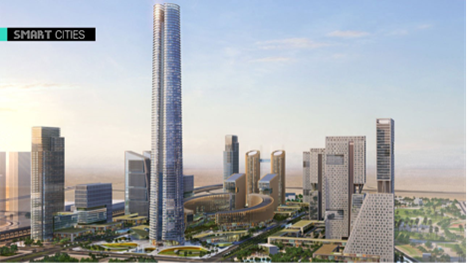
State Capitalism and Sino-Egyptian Urban Development
Following the inception of the Chinese Belt and Road Initiative in 2013, in 2017, the Egyptian government entered into a bilateral collaboration with China. This Sino-Egyptian collaboration entails several infrastructure projects in Egypt, including light railways, and the construction of skyscrapers as part of new mega-projects. These economic changes in Egypt came about due to the political decisions made by the new militarized regime, four years after the 2013 coup. These political shifts entailed the deepening of the state’s role in the Egyptian political economy. In this paper, I explain the urban development projects supported by the Sino-Egyptian bilateral collaboration. I examine the nature of the agreement and how it contributes to the Egyptian economy: do urban development projects contribute to state capitalism in Egypt, or not?
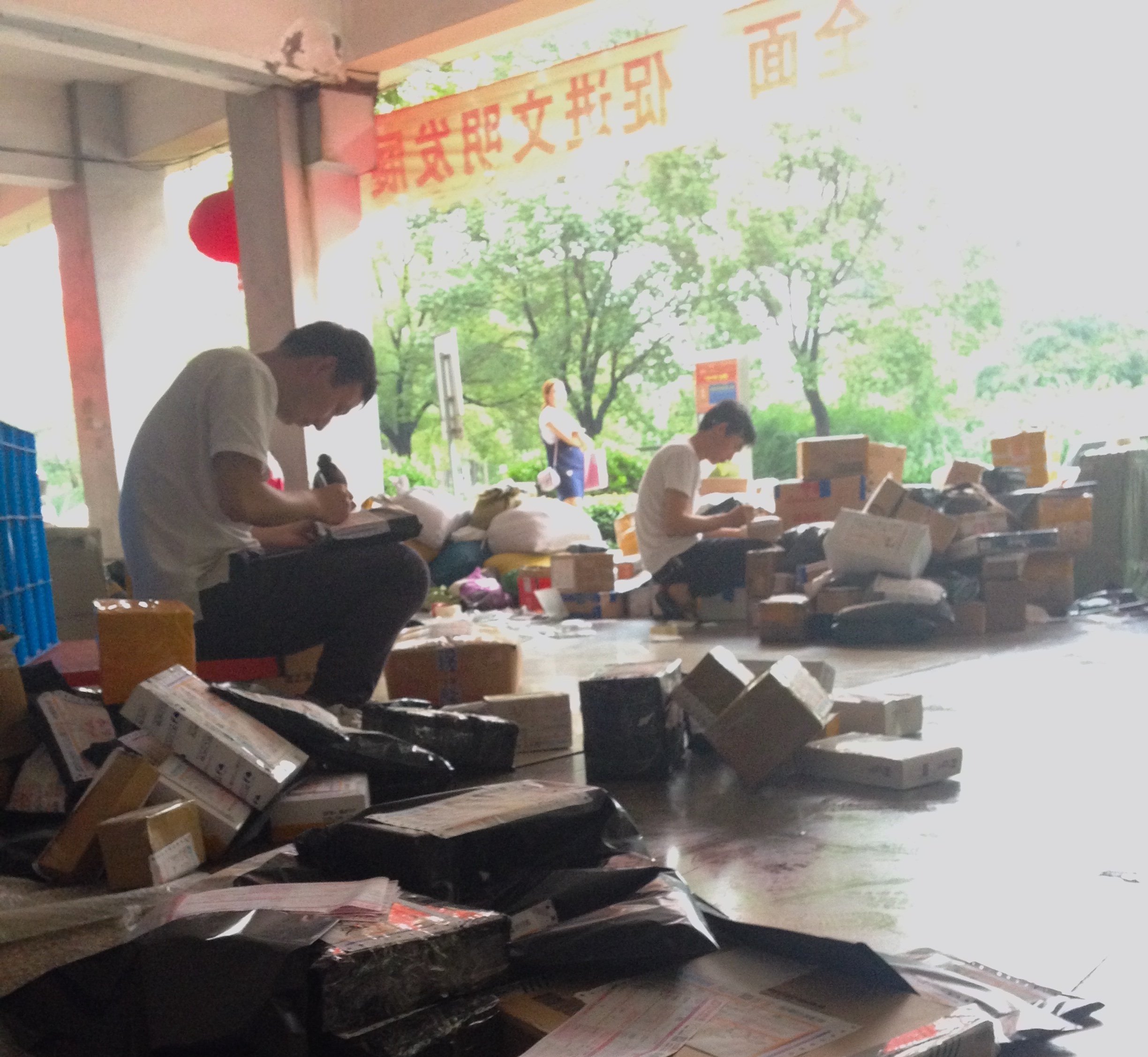
“We are outside of the statistics”: Why a study of China-Palestine trade cannot be one of official numbers
This working paper sidelines the use of official trade data in a study of China-Palestine commerce for an ethnography informed methodology that offers an alternative perspective on globalised Palestinian economic exchange. This approach is anchored in an exploration of the nuanced motivations, fears, ambitions, and associated practices of lesser acknowledged actors who mediate the Palestinian trade economy.

‘Rethinking the Middle East as West Asia’ Beijing Workshop January 13 – 14th 2024
This workshop was held as part of a follow up to the 'Mapping Connections: China and Contemporary Development in the Middle East' Beirut workshop of 14-15th January 2023. It was organised in collaboration with the Centre for West Asia and North Africa Studies at the Institute of International and Area Studies, Tsinghua University (IIAS) and the Arab Council of Social Sciences, (ACSS) Beirut. The event was hosted by our colleagues at IIAS in their newly completed offices, and for several participants this was a first visit to China.

Professor Adam Hanieh Delivers Lecture at the University of Cambridge
On 30 January 2024, Professor Adam Hanieh delivered a lecture titled “The ‘East-East’ Hydrocarbon Circuit: Rethinking Middle East Oil and the World Market” at the Department of Politics and International Studies (POLIS), University of Cambridge. Around forty students, academics, and visiting scholars from different faculties attended the lecture, which was followed by a reception.

Professor Adam Hanieh Delivers Lecture to Students at Tsinghua University, Beijing, China
On 26 October 2023, Professor Adam Hanieh delivered an inaugural lecture to a newly formed student association at Tsinghua University, Beijing, China – the Tsinghua University Student Association of China-MENA Friendship (THU-MENA).

Before and Beyond the Confucius Institute:An Epistemological Turn to Understanding China’s Soft Power in MENA
The Western international relations concept “soft power” has deeply penetrated official, academic, and public vocabulary of China’s presence in the MENA region in this century. The Confucius Institute (CI) has become the Leitmotif of scholarship on China’s soft power in cultural domain. However, the region has also witnessed the emergence of a range of non-CI language or cultural-cum-language training spaces.

Two wheels and two wings: Assembling Chinese industrial park-port projects in the Middle East
Recent research has explored the features of an emergent international development regime that embraces infrastructure-led development as a means of enhancing connectivity and global market integration. While numerous influential international institutions have been at the forefront of the global infrastructure drive, emerging economic actors such as China are becoming increasingly active as providers of infrastructure development assistance.
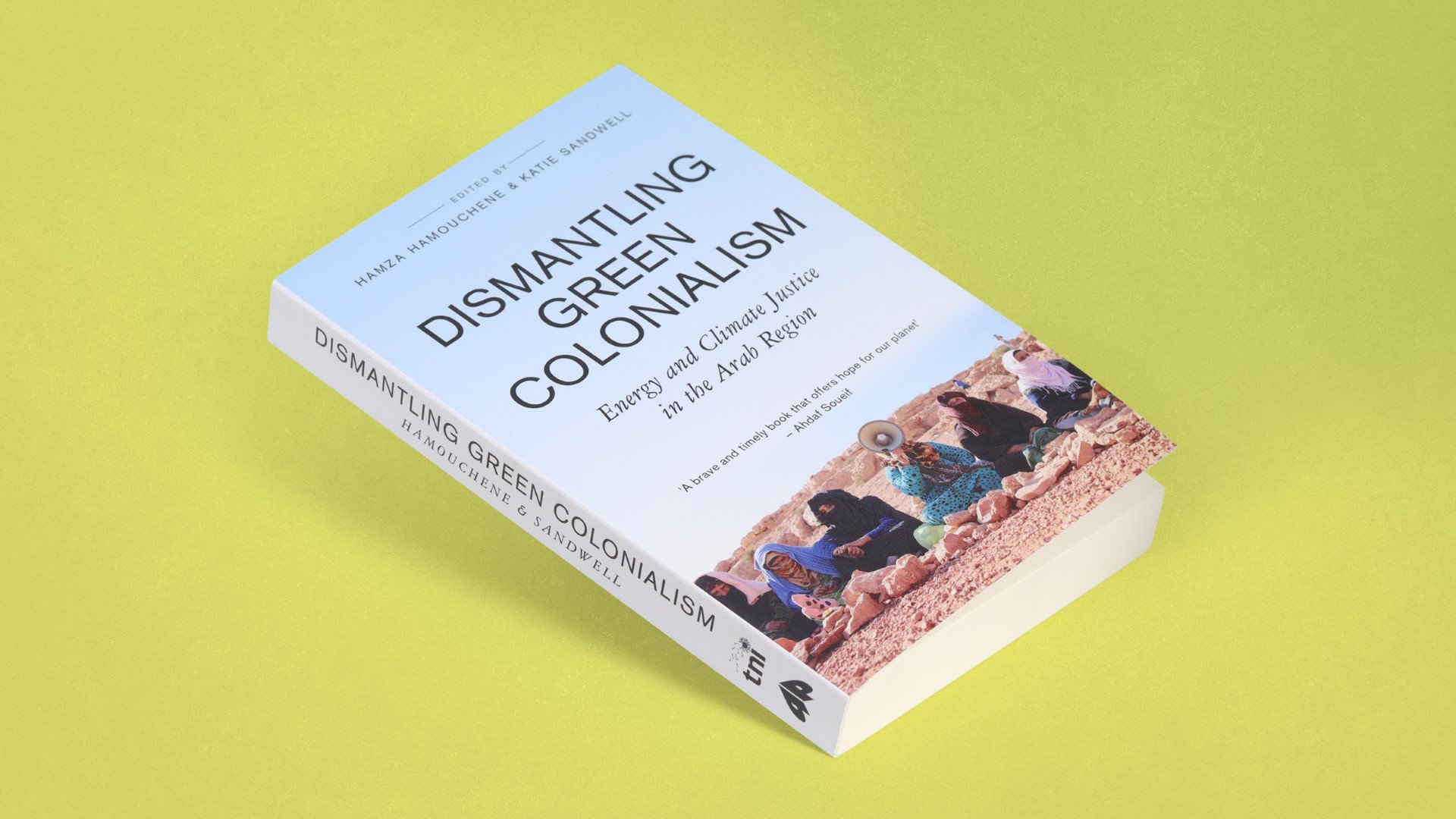
New Chapter in Upcoming Collection on Energy and Climate Justice in the Arab World
Building on his research as part of the 'Mapping Connections' project, Adam Hanieh has a new chapter in the upcoming volume, Dismantling Green Colonialism: Energy and Climate Justice in the Arab Region (Pluto Books/TNI, 2023), co-authored by Hamza Hamouchene and Katie Sandwell.